🚨 BREAKING: Vatican Insiders Sound Alarm as Pope Leo XIV Enters What Some Call a “Critical Period” — Growing Questions Surround the Future of His Papacy
VATICAN CITY — A dramatic phrase is drawing attention to the leadership of Pope Leo XIV: a “critical period.” In a fictional scenario imagining rising pressure behind the walls of the Vatican, the expression has become the center of an intense conversation about responsibility, expectations, and the extraordinary challenges facing the leader of the Roman Catholic Church.
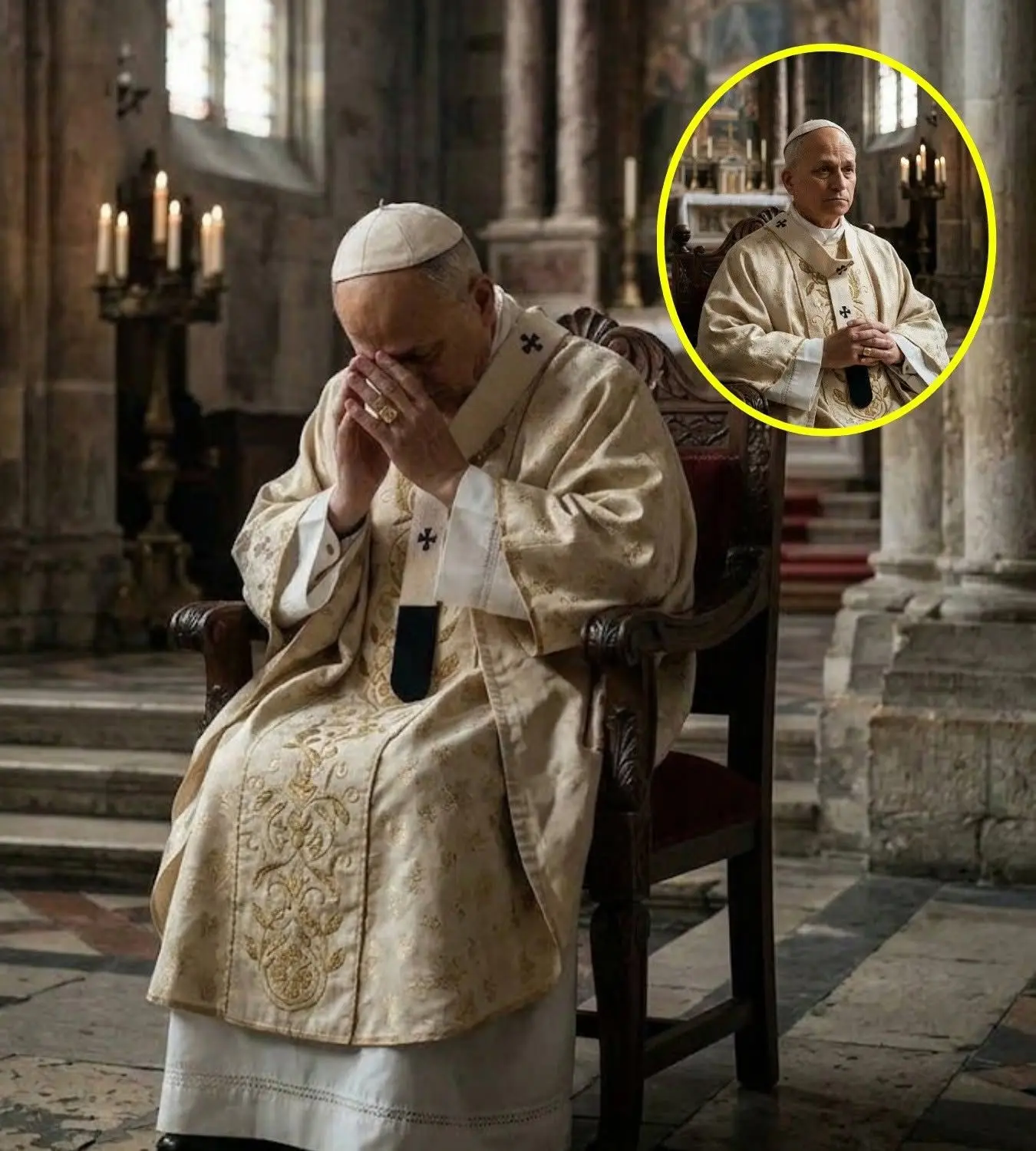
But what exactly would such a critical period mean?
Would it signal an institutional turning point, an increasingly demanding papal schedule, or difficult decisions that could influence the future direction of the Church?
For millions of Catholics around the world, any suggestion of uncertainty surrounding the papacy naturally carries emotional weight.
Yet the most important distinction is between speculation and established fact.
There is no verified evidence presented here of a secret Vatican emergency, an undisclosed medical crisis, or an official warning concerning the Pope's condition.
Instead, this imagined account explores how a period of heightened responsibility could test even the most experienced spiritual leader.
A Moment of Extraordinary Pressure
The papacy is one of the most demanding religious leadership positions in the world.
The Pope serves not only as Bishop of Rome but also as a spiritual figure whose decisions, public appearances, and messages reach communities across continents.
Every speech can carry international significance.
Every diplomatic meeting may attract global attention.
Every major appointment can influence the Church for years.
In this fictional scenario, Vatican observers describe a period in which these responsibilities begin to converge, creating an atmosphere of unusual urgency.
The phrase “critical period” becomes shorthand for a series of difficult questions about leadership, institutional continuity, and the Church's response to a rapidly changing world.
Such pressure would not necessarily indicate personal danger.
It could instead reflect the enormous weight of expectations placed upon the papacy.
The Vatican's Quiet Corridors
Behind the public ceremonies of Vatican City lies a complex institution responsible for diplomacy, administration, religious governance, and communication with Catholic communities worldwide.
In the imagined storyline, conversations among senior officials become increasingly focused on how to manage the demands facing the papal office.
Meetings stretch longer.
Advisers review competing priorities.
Questions emerge about which responsibilities require immediate attention and which can be delegated.
The atmosphere is serious, but not necessarily chaotic.
Institutions with global responsibilities regularly confront periods of difficult decision-making.
What makes the Vatican distinctive is the spiritual significance attached to its leadership.
A routine administrative challenge can attract extraordinary public interest simply because it involves the Pope.
And when information is incomplete, even an ambiguous phrase can generate widespread speculation.
Why the Words “Critical Period” Matter
The expression itself is powerful because it can carry several meanings.
In medical settings, “critical” may suggest a serious health condition.
In institutional discussions, however, it can describe an important turning point.
In diplomatic affairs, it may refer to a particularly sensitive stage of negotiations.
And in religious leadership, it can reflect a period of significant decisions affecting the future of an organization.
Confusing these meanings can lead to unnecessary alarm.
In this fictional Vatican scenario, the phrase refers to leadership pressures rather than a confirmed medical condition.
That distinction is essential.
A dramatic headline should never substitute for reliable information, particularly when public concern involves the health or safety of a real person.
Pope Leo XIV and the Weight of Expectations
Pope Leo XIV occupies a position shaped by centuries of religious tradition.
The papacy carries responsibilities that extend far beyond ceremonial appearances.
The Pope is expected to provide spiritual guidance, encourage dialogue, address major ethical questions, and oversee an institution serving communities around the world.
These responsibilities are especially complex in an era of rapid technological change, political conflict, and shifting social expectations.
Catholics themselves hold diverse perspectives on the Church's priorities.
Some emphasize continuity with established traditions.
Others focus on pastoral outreach, institutional reform, or engagement with contemporary social challenges.
A Pope must navigate these competing expectations while maintaining the spiritual responsibilities associated with the office.
In the imagined period of heightened tension, those challenges become the central focus of Vatican discussions.
The Questions That Could Shape the Future
A period of institutional pressure could raise several difficult questions.
How should the Vatican balance traditional religious practices with the needs of younger generations?
What role should the Church play in international humanitarian crises?
How can Catholic institutions strengthen public trust while responding to demands for accountability?
And how should the papacy communicate its priorities in a world where information travels almost instantly?
These are not questions that can be answered through a single speech or administrative decision.
They require consultation, reflection, and sustained engagement with communities whose experiences differ widely.
In this fictional account, advisers recognize that the choices made during such a period could influence the Church's direction for years.
That possibility gives the imagined situation its dramatic significance.
The Emotional Response of the Faithful
For Catholics, the Pope is more than an international public figure.
He represents a spiritual office closely associated with faith, continuity, and the global identity of the Church.
Consequently, uncertainty surrounding the papacy can provoke strong emotions.
In the imagined scenario, parish communities begin discussing the meaning of the reported “critical period.”
Some express concern about the demands of leadership.
Others emphasize prayer, patience, and trust in the Church's established structures.
Many simply want reliable information rather than dramatic speculation.
Their reactions reflect an important reality.
When people care deeply about an institution or its leader, ambiguous reports can generate anxiety even without evidence of an immediate emergency.
Clear communication therefore becomes especially important.
The Danger of Unverified Vatican Rumors
The Vatican has long attracted intense media attention.
Its history, traditions, diplomatic influence, and distinctive administrative structure make it a subject of international fascination.
But that fascination can also create fertile ground for rumors.
Anonymous claims may circulate without supporting documentation.
Ordinary schedule adjustments can be interpreted as evidence of hidden developments.
And phrases such as “insiders are alarmed” may suggest privileged knowledge even when no identifiable source has been provided.
Responsible reporting requires a higher standard.
Claims about the Pope's health should be supported by credible medical or official information.
Claims about institutional decisions should be connected to identifiable announcements or reliable reporting.
And interpretations should be clearly distinguished from established events.
Without those safeguards, speculation can easily become mistaken for fact.
A Church Facing a Changing World
Beyond the imagined tension, the broader questions surrounding the future of Catholic leadership remain significant.
The Church operates across countries with vastly different cultures, political systems, and economic circumstances.
In some regions, Catholic communities face declining participation and questions about how to engage younger generations.
In others, growing communities encounter challenges involving education, poverty, migration, and access to essential services.
Global conflicts also create humanitarian concerns that frequently intersect with religious institutions.
The Vatican must consider these diverse realities while preserving the unity and spiritual mission of the Church.
Such complexity helps explain why periods of major decision-making can feel especially consequential.
A single institutional choice may affect communities thousands of miles from Rome.
Leadership Under the World's Spotlight
Modern religious leadership takes place under unprecedented public scrutiny.
Every appearance can be recorded.
Every statement can be translated and shared internationally.
Every omission may become the subject of interpretation.
For the papacy, this creates a delicate balance between transparency and the need for careful deliberation.
Not every internal discussion can or should be conducted publicly.
Yet prolonged uncertainty can encourage speculation.
In the fictional scenario, Vatican communications officials confront this challenge directly.
Their task is not merely to respond to headlines.
It is to provide clarity without allowing public pressure to distort institutional decision-making.
That responsibility becomes especially important when emotionally charged language begins circulating.
What Happens During a Genuine Vatican Emergency?
The Catholic Church has established procedures for major transitions and institutional responsibilities.
The death or resignation of a Pope triggers formal processes governed by Church law and longstanding traditions.
Such events are not determined by anonymous rumors or social media speculation.
They involve official announcements, documented procedures, and clearly defined responsibilities.
The existence of those structures provides institutional continuity even during periods of uncertainty.
In the fictional storyline, the discussion of a “critical period” does not mean that any such transition has begun.
Rather, it serves as a reminder that the Church is an institution with established mechanisms for managing significant developments.
The Meaning of Strength in Difficult Times
Leadership is often associated with confidence, decisiveness, and public visibility.
But difficult periods can reveal other important qualities.
Patience.
Humility.
The willingness to listen.
And the ability to distinguish urgent concerns from unnecessary alarm.
In the imagined Vatican situation, the greatest challenge is not simply managing an intense schedule or responding to public attention.
It is maintaining perspective.
The Church's mission extends beyond the circumstances of any single day.
Its traditions, institutions, and communities have developed across centuries.
That long history provides context for understanding moments that may initially appear overwhelming.
The World Watches — But Clarity Matters Most
As the fictional atmosphere of concern continues, the phrase “critical period” remains at the center of the story.
Yet its meaning depends entirely on evidence and context.
Without an official announcement or reliable reporting, it would be irresponsible to interpret the phrase as confirmation of a medical emergency or hidden Vatican crisis.
What can be explored meaningfully is the enormous responsibility associated with the papacy and the difficult questions facing religious institutions in the modern world.
For Catholics and other observers, the most constructive response to uncertainty is to seek accurate information, avoid unsupported claims, and recognize the distinction between institutional challenges and personal emergencies.
A Defining Lesson for the Vatican and the World
In this dramatized account, Pope Leo XIV's supposed “critical period” ultimately becomes a story about leadership under pressure.
It illustrates how easily uncertainty can turn into public alarm, particularly when the subject is a globally recognized religious figure.
It also highlights the importance of compassion, institutional stability, and responsible communication.
The Vatican's influence reaches far beyond its geographical boundaries.
Its messages are heard in churches, schools, communities, and homes across the world.
That reach makes clarity especially valuable.
A period of difficult decisions does not automatically mean a crisis. And a dramatic headline does not establish that a tragedy is unfolding.
For Pope Leo XIV and the institution he leads, the meaningful questions concern spiritual responsibility, leadership, and the future direction of the Church.
In moments of uncertainty, the most powerful response is not fear — it is truth, patience, and faith.
And that may be the most important message of all.
#PopeLeoXIV #Vatican #VaticanCity #CatholicChurch #HolySee #CatholicNews #PapalLeadership #FaithAndHope #VaticanUpdates #ChristianFaith #ChurchLeadership #Rome #WorldReligion #PopeLeo #BreakingNews